
Skip links

Blog

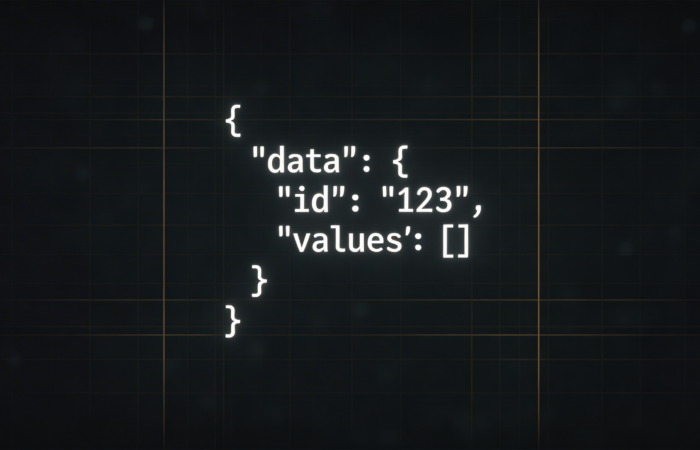
Structured Output from LLMs: Reliable JSON Every Time

Getting an LLM to return valid JSON sounds trivial. Ask for JSON, get JSON. In practice, LLMs produce invalid JSON at a rate between 2% and 15% depending on the model, prompt complexity, and output schema. For a feature that makes 10,000 API calls per
OpenAI vs Anthropic vs Open Source: Choosing Your LLM Provider

Choosing an LLM provider is one of the most consequential technical decisions you will make in 2023. It affects your cost structure, latency profile, compliance posture, and feature velocity for years to come. It is also a decision that most teams make badly, either by

Building AI Agents That Actually Work

The AI agent hype cycle is in full swing. Every week a new framework promises autonomous agents that can browse the web, write code, manage your calendar, and negotiate your rent. The demos are impressive. The production reality is different. Most agent systems are fragile,

Prompt Engineering for Production Applications

Most prompt engineering advice comes from people tinkering with ChatGPT. They share tips like “be specific” and “give examples” as though these insights are revelatory. Building prompts for production applications is a fundamentally different discipline. You are not crafting a single clever instruction; you are

Event-Driven Architecture with Python: A Complete Guide

Request-response is the default architecture for web applications, and for good reason. A client sends a request, a server processes it synchronously, and returns a response. Simple, predictable, easy to debug. This works beautifully for straightforward CRUD operations where a single action has a single

Margin Analysis Automation: From Spreadsheets to Systems

The Spreadsheet Problem Every finance team we’ve worked with has the same origin story. Margin analysis started in a single Excel workbook. Someone built a clever set of formulas. It worked for a while. Then the business grew, and that workbook became a monster —

ETL vs ELT: Making the Right Choice for Your Data Stack

The ETL versus ELT debate has been running for over a decade, and the conventional wisdom has shifted dramatically during that time. Five years ago, the default recommendation was almost always ETL: extract data from sources, transform it in a dedicated processing layer (typically Spark

Building a Procurement Research Framework with AI

Procurement teams spend an extraordinary amount of time on research before they can make sourcing decisions. Before issuing an RFP, they need to understand the supplier landscape for the category. Before negotiating a contract renewal, they need current market rates and competitive alternatives. Before approving

Natural Language Processing for Enterprise Search

Enterprise search is broken in most organizations, and almost everyone has accepted the brokenness as normal. The search bar exists on the company intranet, the document management system, the knowledge base, the wiki, the ticketing system, and a dozen other tools. Users type a query,
Explore
Drag