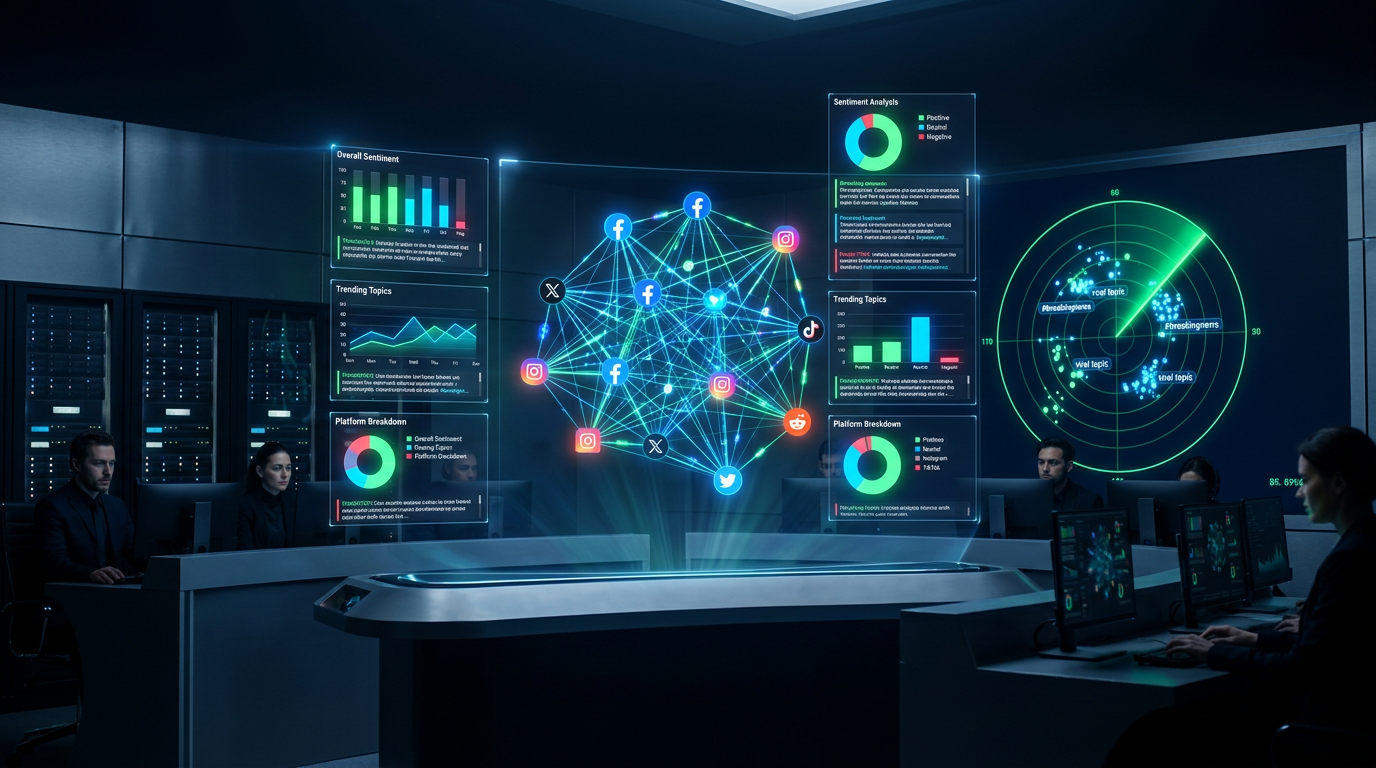


Every business monitors competitors. The question is whether they do it systematically or haphazardly. Most companies fall into the haphazard camp: someone checks a competitor’s website occasionally, a sales rep mentions a competitor’s new pricing in a Slack channel, a product manager bookmarks a competitor’s blog post. The information exists across the organization but it is scattered, stale, undocumented, and impossible to act on consistently.
A competitive intelligence (CI) system formalizes this process. It collects competitor data automatically from public sources, structures it for analysis, detects meaningful changes, and surfaces insights to the people who need them when they need them. We have built CI systems for clients in procurement, SaaS, and e-commerce verticals, and the architecture is remarkably consistent across industries. Here is how to build one that actually works and delivers sustained value.
What to Collect: The Intelligence Taxonomy
Before designing any system, define what intelligence you actually need and what questions it should answer. CI data falls into five categories, and different business contexts prioritize them differently:
- Product intelligence: What products or services do competitors offer? What features have they added or removed recently? What are their pricing tiers and how have they changed? What is their product roadmap signaling (based on job postings, blog posts, and conference talks)?
- Market intelligence: What is their market positioning? Who are they explicitly targeting? What claims do they make in their marketing and how do those claims compare to yours? What partnerships or integrations have they announced?
- Technical intelligence: What technology stack do they use (detectable via tools like BuiltWith, Wappalyzer, or DNS records)? What do their job postings reveal about engineering priorities? What patents have they filed or open-source projects have they published?
- Financial intelligence: Revenue estimates (from industry reports, press releases, or calculation from public data), funding rounds, hiring velocity as a proxy for growth, office expansions or contractions.
- Customer intelligence: Who are their customers (from case studies, press releases, review platforms)? What do customer reviews on G2, Capterra, and Trustpilot reveal about their strengths and weaknesses? What complaints recur?
You do not need all five categories for every competitor. Prioritize ruthlessly based on strategic questions your business is trying to answer right now. If you are deciding whether to enter a market segment, financial and market intelligence matter most. If you are competing for specific deals, product and pricing intelligence are critical. If you are trying to hire better engineers, technical intelligence about competitor stacks and practices is valuable.
Data Collection Architecture
The collection layer is the foundation of any CI system. It needs to be reliable (running consistently on schedule), respectful (both ethically and legally — more on this below), and maintainable (adding a new competitor or data source should not require rewriting the pipeline). Here is the architecture we use:
# Collection pipeline architecture
#
# Data Sources: websites, job boards, review sites, SEC filings,
#               press releases, social media, podcast transcripts
#     |
#     v
# Collectors: one per source type, configured per competitor
#     |
#     v
# Raw Store: S3 bucket with timestamped snapshots, immutable
#     |
#     v
# Parsers: extract structured data from raw HTML/JSON/PDF
#     |
#     v
# Structured Store: PostgreSQL with full change history
#     |
#     v
# Change Detection: diff current vs. previous, classify significance
#     |
#     v
# Delivery: Slack alerts, weekly digests, dashboard, API
Each component is a separate service with its own schedule, error handling, retry logic, and monitoring. This separation is important because collectors fail frequently (websites change their structure, rate limits kick in, services have outages) and you do not want a single collector’s failure to cascade through the entire pipeline.
Collector Design
We build one collector per data source type, not one per competitor. A “pricing page collector” knows how to fetch and snapshot pricing pages and is configured with URLs for each competitor. A “job board collector” knows how to search Indeed, LinkedIn, and Greenhouse for a list of company names. This keeps the collection logic clean, testable, and reusable.
import httpx
import hashlib
from datetime import datetime
from pathlib import Path
import time

class WebPageCollector:
    def __init__(self, name: str, urls: dict[str, str], storage_path: Path):
        self.name = name
        self.urls = urls  # {competitor_name: url}
        self.storage_path = storage_path
        self.client = httpx.Client(
            timeout=30,
            headers={
                'User-Agent': 'HarborCI/1.0 (research@harborsoftware.com)'
            },
            follow_redirects=True
        )

    def collect(self) -> list[dict]:
        timestamp = datetime.utcnow().strftime('%Y%m%d_%H%M%S')
        results = []

        for competitor, url in self.urls.items():
            try:
                # Respectful rate limiting: 5 second delay between requests
                time.sleep(5)

                response = self.client.get(url)
                response.raise_for_status()

                content = response.text
                content_hash = hashlib.sha256(content.encode()).hexdigest()[:16]

                # Store raw snapshot -- immutable, timestamped
                snapshot_dir = self.storage_path / competitor / self.name
                snapshot_dir.mkdir(parents=True, exist_ok=True)
                snapshot_file = snapshot_dir / f"{timestamp}_{content_hash}.html"
                snapshot_file.write_text(content, encoding='utf-8')

                results.append({
                    'competitor': competitor,
                    'source': self.name,
                    'url': url,
                    'timestamp': timestamp,
                    'content_hash': content_hash,
                    'status': 'success',
                    'size_bytes': len(content)
                })
            except Exception as e:
                results.append({
                    'competitor': competitor,
                    'source': self.name,
                    'url': url,
                    'timestamp': timestamp,
                    'status': 'error',
                    'error': str(e)
                })

        return results
Key design choices that matter in production:
- Transparent User-Agent with contact email. We identify ourselves clearly. Covert scraping is both ethically problematic and technically brittle (it triggers aggressive bot detection). If a site blocks our User-Agent, we respect that and find alternative data sources.
- Content hashing for efficient change detection. We hash every snapshot so we can instantly detect whether content has changed without performing expensive text diffs. This eliminates 60-80% of processing immediately since most pages do not change between collection cycles.
- Raw storage is immutable and permanent. We keep every raw snapshot indefinitely. Storage is cheap ($0.023 per GB per month on S3 Standard, less on Glacier). The raw data is invaluable for historical trend analysis, debugging parsing issues, and reprocessing when we improve our extraction logic.
- Aggressive rate limiting. Five seconds between requests to the same domain. We are researchers, not attackers, and we want our collection to run for years without getting blocked.
Change Detection: Finding Signal in Noise
Collecting data is the easy part. The hard part is detecting meaningful changes amid constant noise. A competitor’s website changes constantly — updated CSS classes, rotated hero images, refreshed testimonials, incremented copyright years, A/B test variants. These are noise. A price increase, a new product tier, a removed feature, or a repositioned tagline is signal. The system must distinguish between the two reliably, because the entire value proposition of a CI system depends on the quality of its alerts.
We use a three-layer change detection approach that progressively filters noise:
Layer 1: Content hash comparison. If the hash of the current snapshot matches the previous snapshot exactly, nothing changed at all. Skip all further processing. This eliminates 60-80% of snapshots immediately and costs essentially zero compute.
Layer 2: Structural diff on extracted content. For snapshots where the hash changed, extract the relevant content (pricing table, feature list, product catalog, team page) from both the current and previous snapshot using CSS selectors or XPath. Diff only the extracted content, ignoring irrelevant elements like navigation, footer, ads, cookie banners, and chat widgets.
from bs4 import BeautifulSoup
import difflib

def extract_pricing_content(html: str) -> str:
    """Extract just the pricing-relevant content from a page."""
    soup = BeautifulSoup(html, 'html.parser')

    # Remove noise elements first
    for element in soup.select('nav, footer, .cookie-banner, .chat-widget, script, style'):
        element.decompose()

    # Try common pricing page patterns
    selectors = [
        '[class*="pricing"]',
        '[class*="plan"]',
        '[id*="pricing"]',
        '[class*="tier"]',
        'table'
    ]

    for selector in selectors:
        elements = soup.select(selector)
        if elements:
            return 'n'.join(
                el.get_text(separator=' ', strip=True) for el in elements
            )

    # Fallback: return main content area text
    main = soup.find('main') or soup.find('[role="main"]') or soup.find('body')
    return main.get_text(separator=' ', strip=True) if main else ''

def detect_changes(current_html: str, previous_html: str) -> dict:
    current_content = extract_pricing_content(current_html)
    previous_content = extract_pricing_content(previous_html)

    if current_content == previous_content:
        return {'changed': False, 'reason': 'content_identical_after_extraction'}

    diff = list(difflib.unified_diff(
        previous_content.splitlines(),
        current_content.splitlines(),
        lineterm=''
    ))

    added = [l[1:] for l in diff if l.startswith('+') and not l.startswith('+++')]
    removed = [l[1:] for l in diff if l.startswith('-') and not l.startswith('---')]

    return {
        'changed': True,
        'added_lines': added,
        'removed_lines': removed,
        'diff_size': len(added) + len(removed)
    }
Layer 3: Semantic classification with LLM. For changes that survive layers 1 and 2 (approximately 5-15% of original snapshots), use a language model to classify the change and assess its business significance:
classification_prompt = """
A competitor's pricing page changed. Here are the differences:

Removed content:
{removed_lines}

Added content:
{added_lines}

Classify this change into one of these categories:
1. PRICING_CHANGE - prices were increased, decreased, or restructured
2. FEATURE_CHANGE - features were added, removed, or modified in a plan
3. TIER_CHANGE - pricing tiers were added, removed, or restructured
4. MESSAGING_CHANGE - positioning, tagline, or value prop language changed
5. COSMETIC - visual/formatting changes with no business impact
6. UNKNOWN - cannot determine the nature of the change

Also rate business significance: HIGH, MEDIUM, LOW

Return JSON: {{"category": "...", "significance": "...", "summary": "one sentence"}}
"""
Only HIGH and MEDIUM significance changes trigger real-time notifications. LOW and COSMETIC changes are logged for the weekly digest but do not interrupt anyone’s day. This aggressive filtering is essential for preventing alert fatigue, which is the number one killer of CI systems. If your system sends 50 alerts a week and 48 are noise, people stop reading them within a month, and the system’s value drops to zero regardless of how good the other 2 alerts are.
Structured Storage and Historical Analysis
Raw snapshots are essential for debugging and reprocessing, but operational queries need structured data. We maintain a PostgreSQL database with normalized tables that track competitors, their attributes over time, and detected changes:
CREATE TABLE competitors (
    id SERIAL PRIMARY KEY,
    name VARCHAR(255) NOT NULL,
    domain VARCHAR(255) UNIQUE,
    industry VARCHAR(100),
    created_at TIMESTAMP DEFAULT NOW()
);

CREATE TABLE pricing_snapshots (
    id SERIAL PRIMARY KEY,
    competitor_id INTEGER REFERENCES competitors(id),
    captured_at TIMESTAMP NOT NULL,
    tiers JSONB NOT NULL,
    raw_snapshot_path VARCHAR(500),
    content_hash VARCHAR(32)
);

CREATE TABLE product_features (
    id SERIAL PRIMARY KEY,
    competitor_id INTEGER REFERENCES competitors(id),
    feature_name VARCHAR(255) NOT NULL,
    first_seen TIMESTAMP NOT NULL,
    last_seen TIMESTAMP NOT NULL,
    status VARCHAR(50) DEFAULT 'active',
    details JSONB
);

CREATE TABLE intelligence_events (
    id SERIAL PRIMARY KEY,
    competitor_id INTEGER REFERENCES competitors(id),
    event_type VARCHAR(50) NOT NULL,
    significance VARCHAR(20) NOT NULL,
    summary TEXT NOT NULL,
    details JSONB,
    source_url VARCHAR(500),
    detected_at TIMESTAMP DEFAULT NOW(),
    acknowledged_at TIMESTAMP,
    acknowledged_by VARCHAR(100)
);

CREATE INDEX idx_events_unacked
    ON intelligence_events(significance)
    WHERE acknowledged_at IS NULL;
The intelligence_events table is the operational heart of the system. Every meaningful detected change becomes an event with a classification, significance rating, and human-readable summary. Events are surfaced in a dashboard, sent as notifications, and tracked for acknowledgment. Unacknowledged HIGH-significance events trigger escalation alerts after 24 hours to ensure nothing critical slips through.
The historical data is equally valuable for strategic analysis. Pricing history lets you chart a competitor’s pricing trajectory over time. Feature tracking shows their product evolution. Job posting history reveals shifts in their technical strategy months before they announce products publicly.
Delivery: Getting Intelligence to Decision Makers
A CI system that nobody uses is worse than no CI system at all, because it consumes engineering resources and creates a false sense of competitive awareness. The delivery mechanism must match how your organization actually works and how different stakeholders consume information.
Slack integration for real-time alerts. A dedicated #competitive-intel channel receives HIGH-significance events immediately. The message includes the competitor name, change category, one-sentence summary, and a link to the full diff in the dashboard. Keep messages terse — if a Slack message requires scrolling, it will be ignored.
Weekly digest email for comprehensive review. Every Monday morning, the system generates a summary of all changes detected in the previous week, grouped by competitor and sorted by significance. This catches anything that fell through the cracks in real-time monitoring and provides a regular touchpoint for strategic review.
Interactive dashboard for self-service exploration. A web application (we build ours with Streamlit for rapid prototyping or Next.js for production polish) that lets users browse competitors, view pricing history charts, compare feature matrices side-by-side, and search the intelligence event history. The dashboard is most useful for strategic planning sessions, quarterly reviews, and win/loss analysis where stakeholders need to explore data on their own terms.
Legal and Ethical Boundaries
CI systems operate in a space that demands clear, documented boundaries. Competitive intelligence is legal and normal business practice. Corporate espionage is not. The line between them is sometimes blurry, so we define explicit rules that err on the side of caution:
- Only collect publicly available information. No credential stuffing, no exploiting vulnerabilities, no accessing authenticated portals or private APIs.
- Respect robots.txt completely. If a site’s robots.txt disallows scraping of specific paths, we honor that without exception.
- Rate limit aggressively. One request per 5 seconds per domain minimum. We are conducting research, not launching a denial-of-service attack.
- Identify yourself transparently. Our User-Agent includes a contact email. If a site operator has concerns, they can reach us directly.
- No deception. We do not create fake accounts to access gated content, pose as potential customers to extract pricing, or reverse-engineer proprietary systems.
- Comply with terms of service. If a site’s ToS explicitly prohibits automated access, we do not scrape it. We use manual review, publicly available reports, or alternative data sources instead.
These constraints limit what we can collect, but they ensure the system is legally defensible and ethically sound. A CI system that crosses legal or ethical lines is a liability that can cost far more than the intelligence it provides.
Measuring Effectiveness and ROI
CI systems are notoriously difficult to assign direct ROI to because the value is indirect: better-informed decisions, faster reactions to market changes, avoided strategic mistakes. We measure effectiveness through proxy metrics that correlate with business value:
- Time to awareness: How quickly does the team learn about a competitor’s significant change? Before CI system: typically days to weeks (whenever someone happens to notice). After CI system: hours. This is the most tangible metric.
- Coverage breadth: How many competitors and data sources are monitored consistently? Before: 2-3 competitors checked sporadically when someone remembers. After: 10-15 competitors monitored across 5-8 data source types continuously.
- Alert quality (signal-to-noise ratio): What percentage of alerts are acknowledged and acted upon? Target: above 40% for HIGH-significance alerts. Below 20% means your significance classification needs tuning.
- Stakeholder engagement: How often do decision makers access the dashboard or reference CI data in meetings and documents? Track dashboard logins and digest email open rates.
Conclusion
A competitive intelligence system is not a product you buy off the shelf — it is a capability you build and refine over time. The technology components are straightforward: web collection with respectful scraping, change detection with layered filtering, structured storage with full history, and multi-channel delivery that matches how your team works. The hard work is operational: defining what intelligence actually matters for your business, maintaining collection infrastructure as competitor websites evolve, managing alert fatigue through aggressive significance filtering, and ensuring intelligence reaches and influences the decisions that matter.
Start small. Pick your top 3 competitors and monitor their pricing pages and feature lists. Build the collection pipeline, the change detection, and the Slack alerting. Get the team accustomed to receiving and acting on intelligence. Then expand to more competitors, more data sources, and more sophisticated analysis as the system proves its value. A CI system that monitors 3 competitors reliably and surfaces every significant change is infinitely more useful than one designed to monitor 50 that is still being built six months from now.